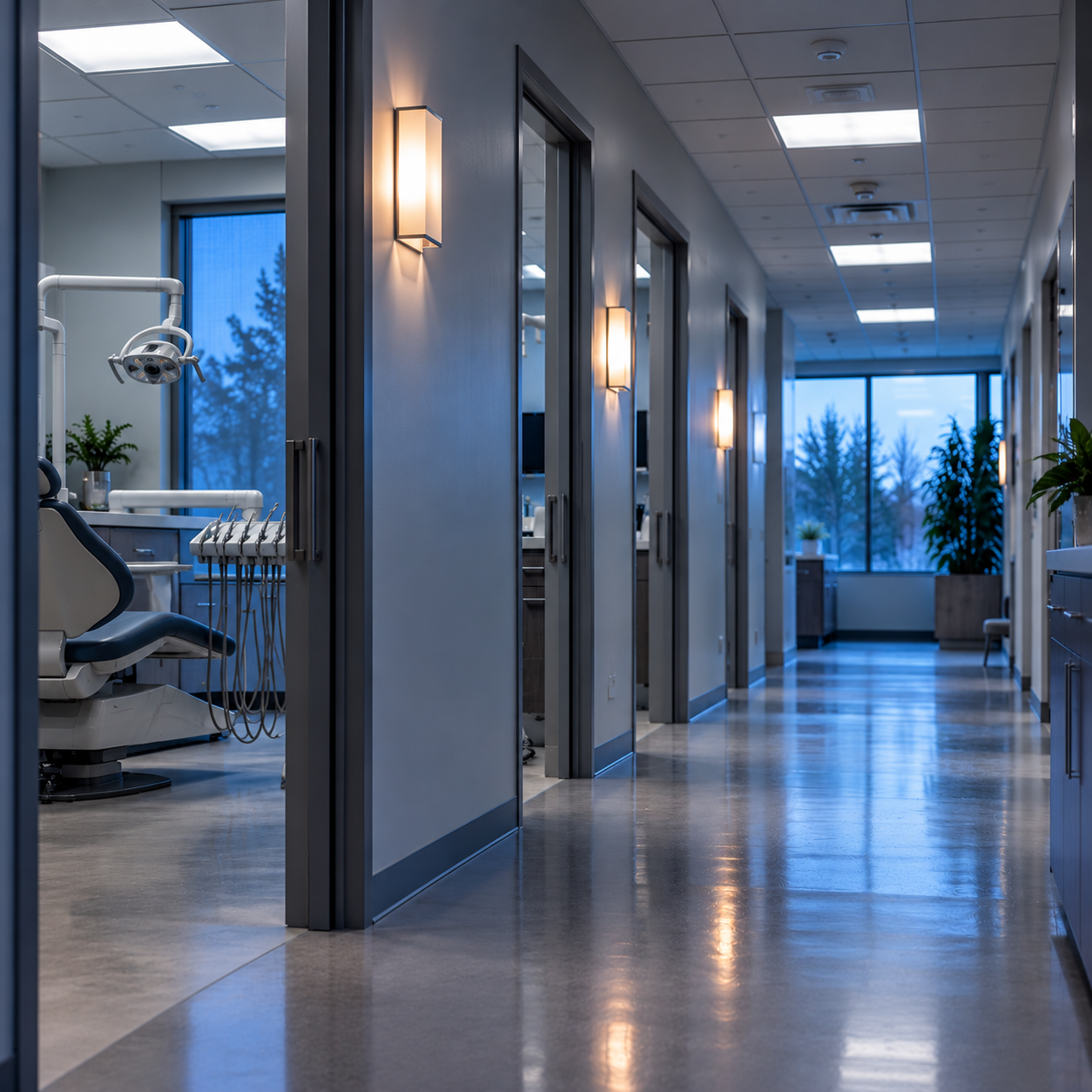
At 7:42 in the morning, the dental practice is already working.
The lights are on. Someone has reviewed the schedule. A clinical team member is checking what the first appointments will require, while someone else is looking at a question that came up late yesterday afternoon. The first patient won't arrive for another eighteen minutes, but several small decisions are already being made.
From the outside, the office might appear quiet. Inside, the day is beginning to take shape.
There is something interesting about this period before the first appointment because much of the work has no immediate audience. Nobody is watching the team clarify an insurance detail, notice an inconsistency in the schedule, or make sure a particular patient's information is ready. These tasks don't necessarily produce a memorable interaction or a visible accomplishment.
Their value becomes apparent later, often because something doesn't happen.
A patient doesn't have to wait while someone searches for information that should have been available. An appointment doesn't begin with confusion about what was scheduled. A question that could have interrupted the clinical team has already been answered. Someone who needed a clarification received it before arriving.
In a well-prepared practice, some of the most useful work disappears into the ordinary experience of the day.
That doesn't mean preparation should be invisible to the people responsible for it. Quite the opposite. Good preparation requires clear ownership, dependable communication, and enough visibility for the team to know which questions remain unanswered.
But to the patient, the result often feels remarkably simple: the practice seems ready.
This is easy to underestimate because we tend to measure work through activity. We notice calls being answered, appointments being completed, patients being checked in, and problems being resolved. Those are tangible things happening in real time.
Preparation works differently.
A scheduling question answered yesterday may prevent three conversations today. An insurance detail clarified before the appointment may save someone from having to reconstruct the issue while a patient waits. A clinical team that knows what to expect can begin with greater confidence, even though unexpected situations may still arise.
The work doesn't always become more impressive because it was done early. It becomes less disruptive.
And that changes the experience of the people inside the practice.
Consider a front desk employee beginning the morning with several unresolved questions from the previous day. A patient needs a callback, an appointment requires clarification, and an insurance issue is still waiting for an answer. None of these items is necessarily urgent by itself, but each competes with the new work arriving that morning.
Now consider a morning when those items were addressed, assigned, or made clearly visible before the day began. The employee may still have plenty to do, but they aren't also trying to reconstruct everything that was left unfinished.
The difference isn't simply fewer tasks. It's greater clarity about where the work stands.
Of course, no amount of preparation can make a dental practice completely predictable. Patients bring new concerns. Procedures take unexpected turns. Employees become unavailable. Equipment fails. A carefully arranged schedule can change within minutes.
The purpose of preparation isn't to eliminate those realities. It's to avoid adding preventable uncertainty to the uncertainty that naturally comes with healthcare.
This distinction matters because an operation can become so focused on responding quickly that it neglects the quieter work of making responses unnecessary.
A team becomes very good at finding missing information because information is frequently missing. Someone develops impressive skill at resolving scheduling conflicts because conflicts repeatedly reach the day of the appointment. An experienced employee knows exactly whom to call when an insurance question becomes urgent.
Those abilities are valuable. Dental practices need people who can respond when circumstances change.
But there is a difference between being good at recovering from avoidable problems and building an operation where fewer of those recoveries are required.
Preparation doesn't have to mean elaborate meetings or lengthy morning checklists. In fact, a process that consumes too much time can become another source of friction.
Sometimes it means that tomorrow's schedule is reviewed while there is still time to resolve questions. Sometimes it means a task has a clear owner rather than being passed between people. Sometimes it means a patient receives accurate information before the appointment instead of discovering an issue at the front desk.
The specific activities will vary by practice. What matters is whether the work is happening at a point when it can still make the day easier.
There is also a human benefit that can be difficult to capture in operational reporting.
When a team begins the morning prepared, people have more attention available for the situations that genuinely require it. A receptionist can greet a patient without simultaneously searching for an answer that should have been available yesterday. An assistant can focus on preparing for treatment rather than chasing an administrative detail. An office manager can respond to an unexpected problem without already carrying several preventable ones.
Preparation creates room for professional attention.
That room matters because patients don't arrive as operational tasks. They arrive as people with questions, expectations, concerns, and sometimes a fair amount of uncertainty about what will happen next.
A prepared team is better positioned to meet them where they are.
Not because every appointment becomes perfect, but because the practice isn't unnecessarily distracted by work that could have been completed earlier.
There is a temptation to think of this as efficiency, and efficiency is certainly part of it. But efficiency alone doesn't fully explain why preparation matters.
The larger benefit is continuity. Information is available when it is needed. Responsibilities remain clear from one day to the next. Unfinished questions don't repeatedly return as new interruptions. The work completed yesterday continues to support the work happening today.
This is particularly important as practices grow. A small team may manage preparation informally because everyone knows what is happening and who is handling it. As more employees, patients, providers, and schedules become involved, that shared awareness becomes harder to maintain without dependable processes.
What once happened naturally may need more deliberate structure.
That doesn't require making every action rigid or removing the judgment of experienced employees. Good preparation should support people, not reduce them to following instructions without thinking.
It should make relevant information easier to find, expectations easier to understand, and responsibilities easier to carry.
By 8:00, the first patient arrives.
They may be thinking about the appointment, whether treatment will be uncomfortable, what the dentist will say, or whether they'll make it back to work on time. They aren't thinking about what happened in the office at 7:42.
And they shouldn't have to.
The team greets them. The information is ready. The appointment begins.
There may still be surprises before the morning is over. Something unexpected may require a decision, and the team will need to respond. That's part of operating a dental practice.
But at least the day didn't begin with yesterday's preventable questions becoming today's problems.
The patient will probably never know how much work happened before they walked through the door.
They'll just know the practice was ready.