
Patient Communication
The Order of a Patient's Questions
When a dental patient arrives with written questions, the order they chose can show how they want to approach an important decision.
5 min readNov 7, 2026
Operational Insights
Evidence-based guides on front desk efficiency, patient communication systems, insurance workflows, and practice scalability — written for dental leaders who think operationally.
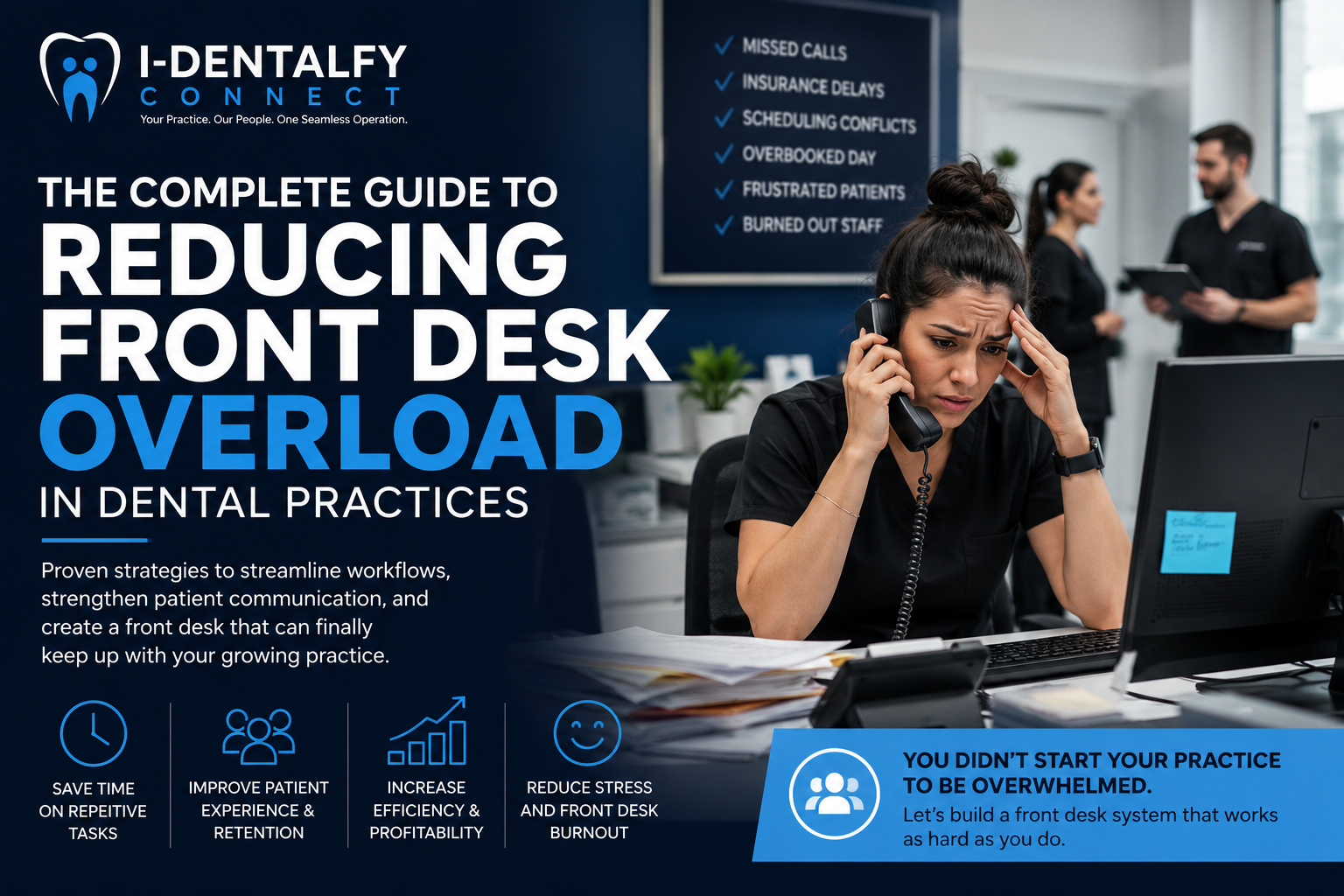
Proven strategies to streamline workflows, strengthen patient communication, and create a front desk that can finally keep up with your growing practice.
Our most popular operational insights
When a dental patient arrives with written questions, the order they chose can show how they want to approach an important decision.
Six alternatives to hiring an in-house dental front desk, how they compare, and what to ask any provider before you sign.
When a patient brings someone to a dental appointment, their support can be invaluable. But good communication still makes room for the patient's own voice.
When a dental patient arrives with written questions, the order they chose can show how they want to approach an important decision.

Six alternatives to hiring an in-house dental front desk, how they compare, and what to ask any provider before you sign.

When a patient brings someone to a dental appointment, their support can be invaluable. But good communication still makes room for the patient's own voice.

Accurate operational reports can still lead dental practices toward the wrong decisions. A three-question method helps leaders test causes before committing resources.

A backup assignment isn't proof of coverage. Learn a five-checkpoint insurance-verification test to identify access, context, escalation, and documentation gaps before an absence.

Year-end coverage problems can begin well before a call-out, when information already available to the team is never brought together into a plan.

An accurate dental insurance estimate can become outdated before treatment. Learn how verification timing, recheck triggers, and communication affect financial risk.

Well-intentioned reassurance can create expectations a dental practice cannot support. Why accurate estimates, honest uncertainty, and careful language matter to patient trust.
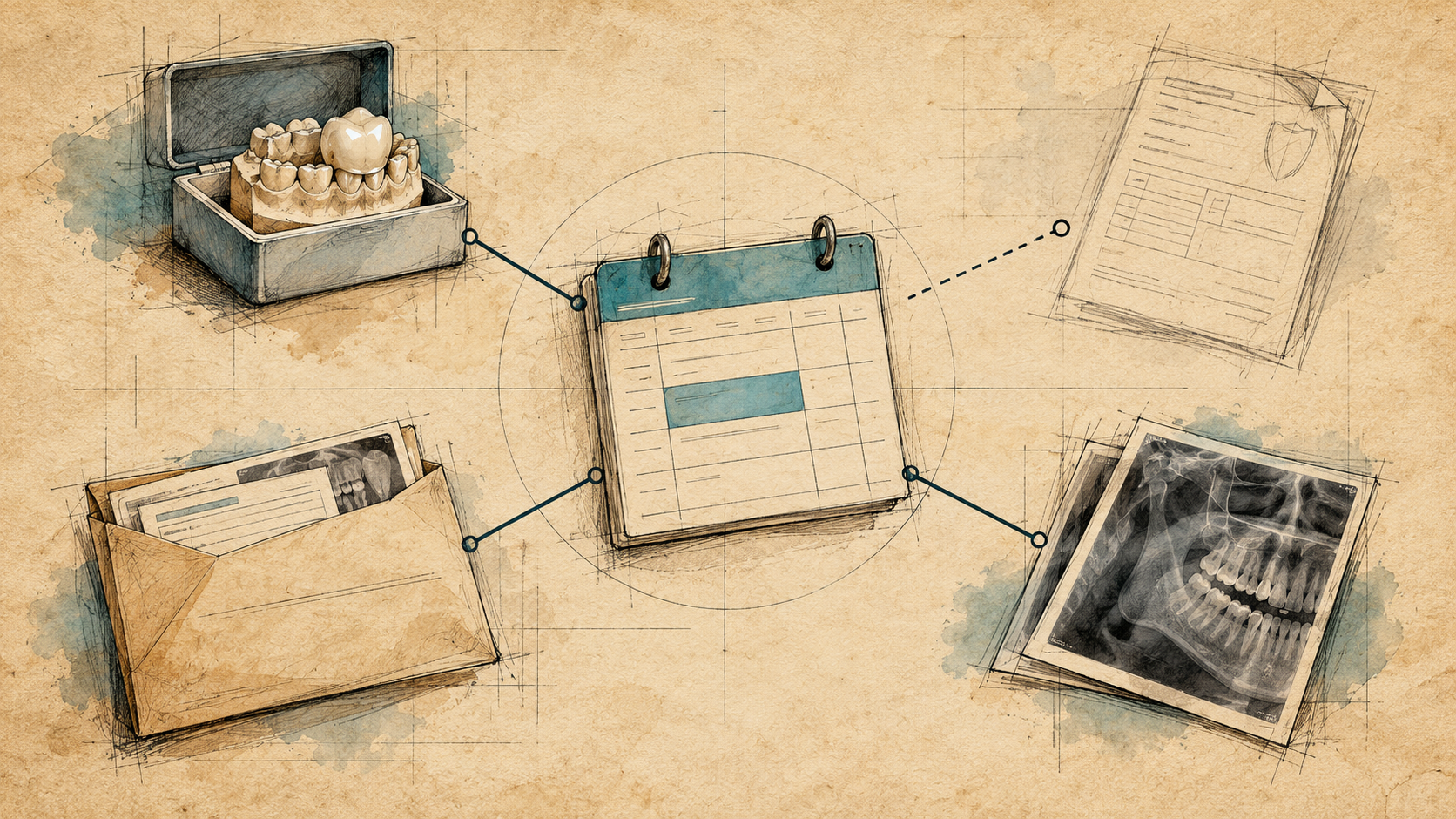
A booked appointment reserves time, but a ready appointment means the materials, information, and outside decisions required for the visit are actually in place.
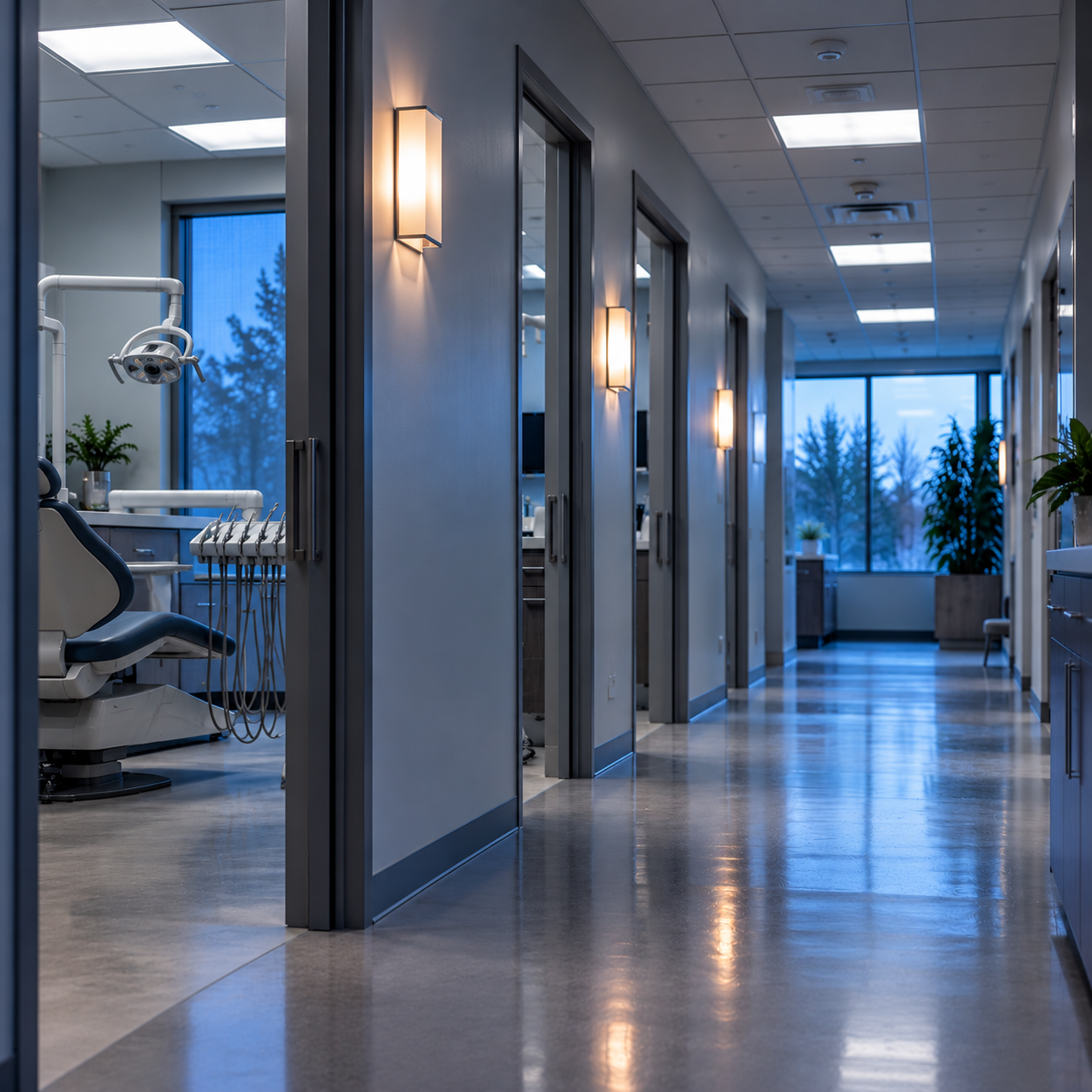
The first patient of the day rarely sees the preparation that makes an appointment feel effortless. From reviewing schedules to resolving unanswered questions, some of the most important work in a dental practice happens before anyone sits in the chair.

A patient's experience with a dental practice continues after the appointment ends. What they remember, repeat, and share with others is often shaped by small moments of clarity, consideration, and trust.

A healthy dental practice doesn't require a manager to approve every ordinary decision. When expectations, boundaries and ownership are clear, experienced employees can exercise judgment without turning every small question into an interruption.

Four ordinary tasks spread across twenty minutes may barely register. Put the same four tasks inside ninety seconds and the experience changes. Operational capacity is partly about giving work somewhere dependable to go when normal demands arrive at the same time.

Every dental practice has people who accumulate knowledge the rest of the team depends on. That experience is valuable. The question is whether ordinary operational knowledge also has somewhere to live outside one person's head.

Patients sometimes apologize for things dental teams consider completely ordinary. The difference is perspective: a dental team sees mouths professionally, while a patient experiences theirs personally. Sometimes good patient communication means knowing how to make an uncomfortable moment feel ordinary again.

Longtime patients experience a dental practice across decades while employees often experience it in chapters. The practice can change without making those patients feel like their relationship with it keeps starting over.

Twenty minutes before an appointment and twenty minutes after one are both twenty minutes in a waiting room. But they aren't the same experience. The difference isn't always time. Sometimes it's expectation.

Not every patient who leaves without making a decision has ended the conversation. Sometimes they simply need time. Good follow-up preserves enough context that when they're ready to come back, they don't have to start over.

Some of the hidden workload inside a dental practice comes from work that technically belongs to one person but is still being carried in several other people's heads. When follow-through becomes dependable, people gain something surprisingly valuable: permission to stop thinking about it.

A patient can arrive on time and still need a few minutes before they're ready to walk through the door. The practice can't remove everything a patient is carrying, but it can make sure uncertainty isn't one more thing.
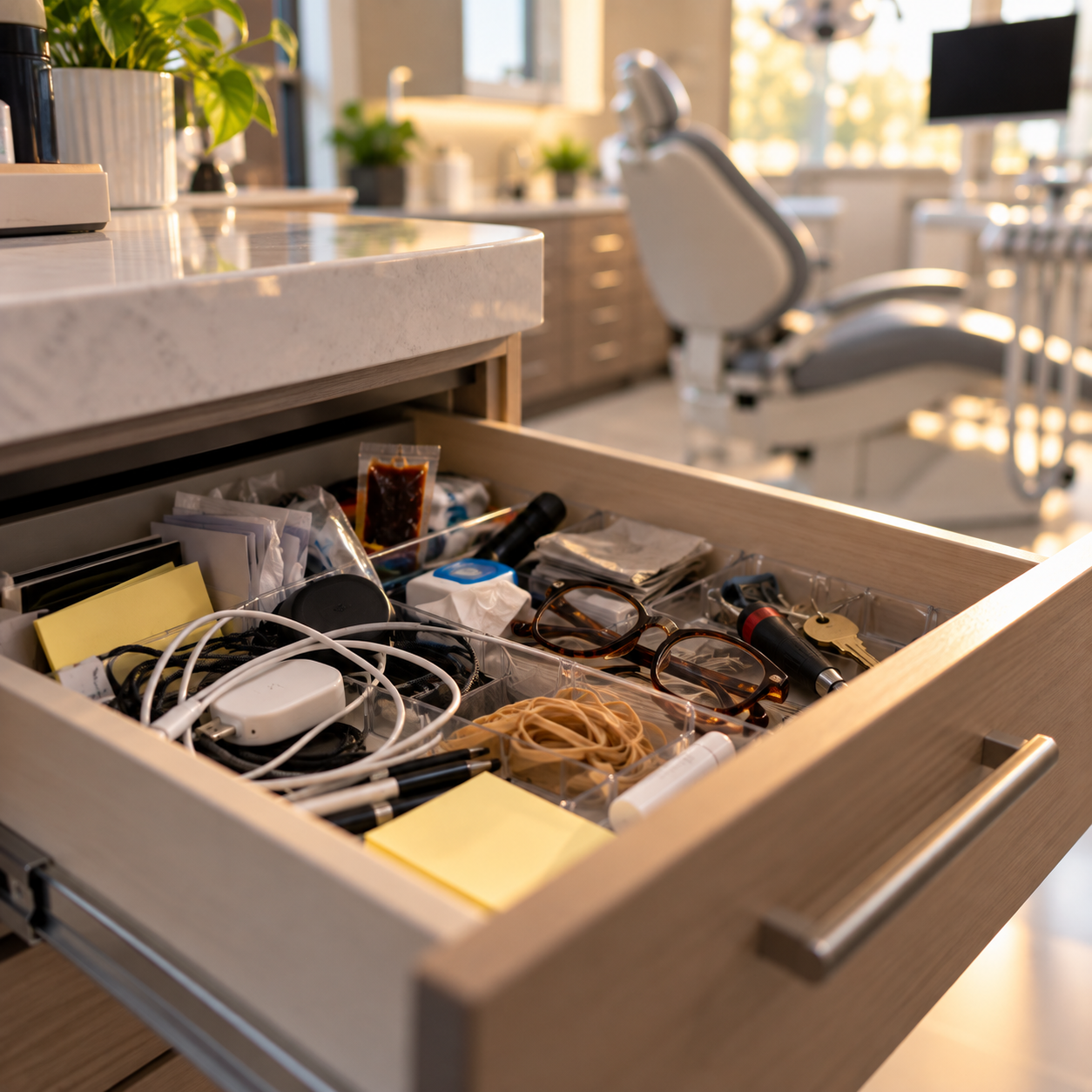
Every established dental practice has little workarounds nobody officially designed. Some are brilliant. Some solved problems that disappeared years ago. All of them can tell you something about how the practice actually works.

When a patient stops asking for "the front desk" and starts asking for someone by name, something meaningful has happened. Good operations should protect those relationships without making the practice dependent on one person for everything else.

A patient doesn't know what happened during the six appointments before theirs. Good operations help keep unnecessary noise from following the dentist into the moments that need their full attention.

Practice owners learn to keep a mental pulse on almost everything. But caring about the practice and personally remembering everything happening inside it aren't the same thing.

Two days can have almost identical schedules and feel completely different. Sometimes what makes a day hard isn't how much work there is, but everything that has to happen around the work.

Being busy is usually a good thing for a dental practice. But when good people feel like they can't leave for lunch without something falling behind, it may say more about the operation than it does about the workload.

Patients don't experience your front desk, billing, insurance, scheduling, and treatment coordination as separate functions. They experience one practice. The less they have to understand about how the operation works behind the scenes, the more seamless that experience becomes.
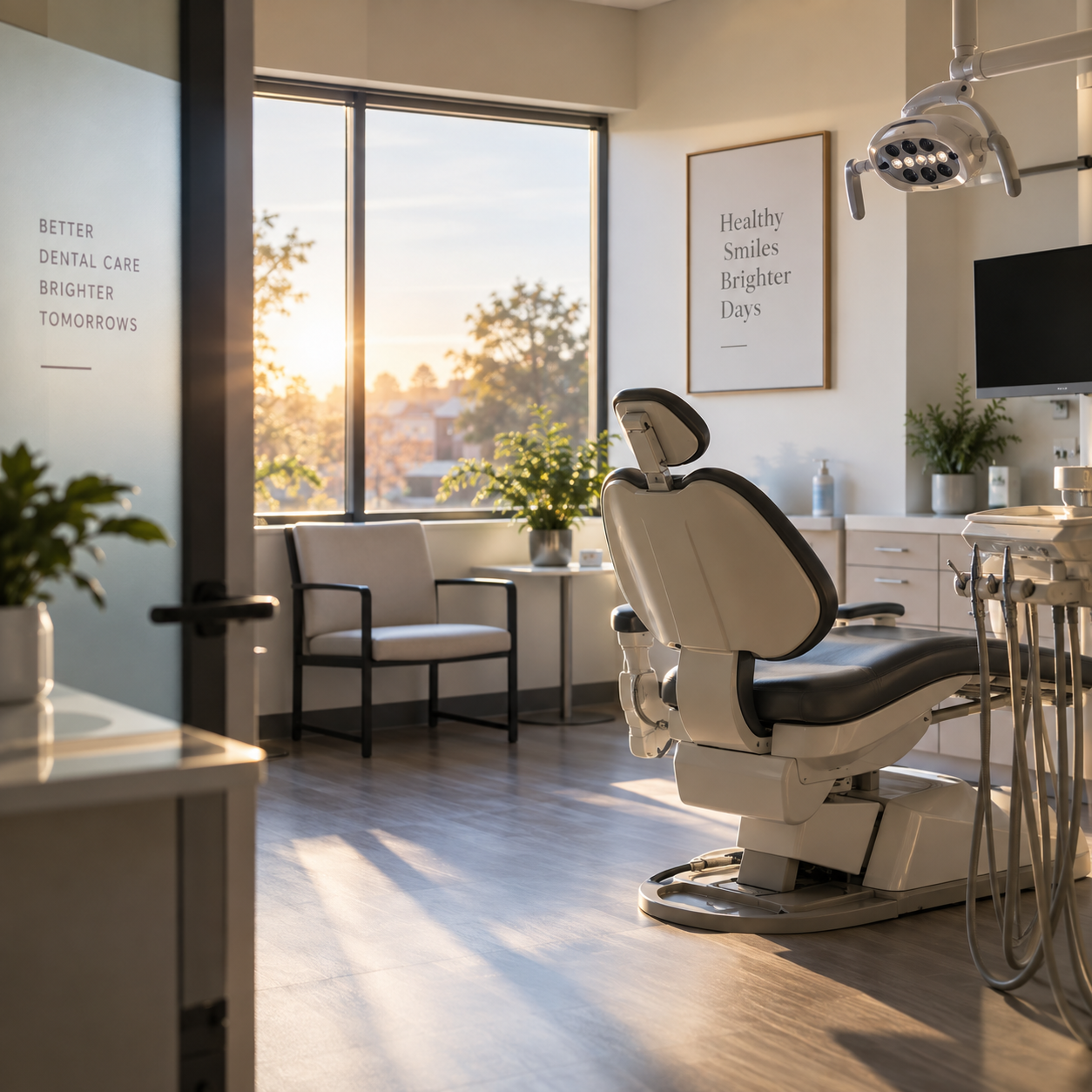
The strongest operational systems don't demand constant attention. They quietly reduce the number of things a dental team has to remember, check, reconstruct, and chase.

Most dental practices don't need extra capacity every minute of every day. But when an ordinary day suddenly stops being ordinary, having another layer of support can make the difference between getting through the day and carrying it into tomorrow.

Responsive service handles a patient's question well. Anticipatory service recognizes predictable moments of uncertainty early enough that some questions never need to be asked.

A strong operating system doesn't make experienced employees less valuable. It removes the routine dependency surrounding their expertise so they can spend more time on the work where experience actually matters.

When a patient says “I need to think about it,” the visible result may be an unscheduled treatment plan. But understanding what the patient is actually hesitant about can reveal very different—and sometimes very appropriate—next steps.
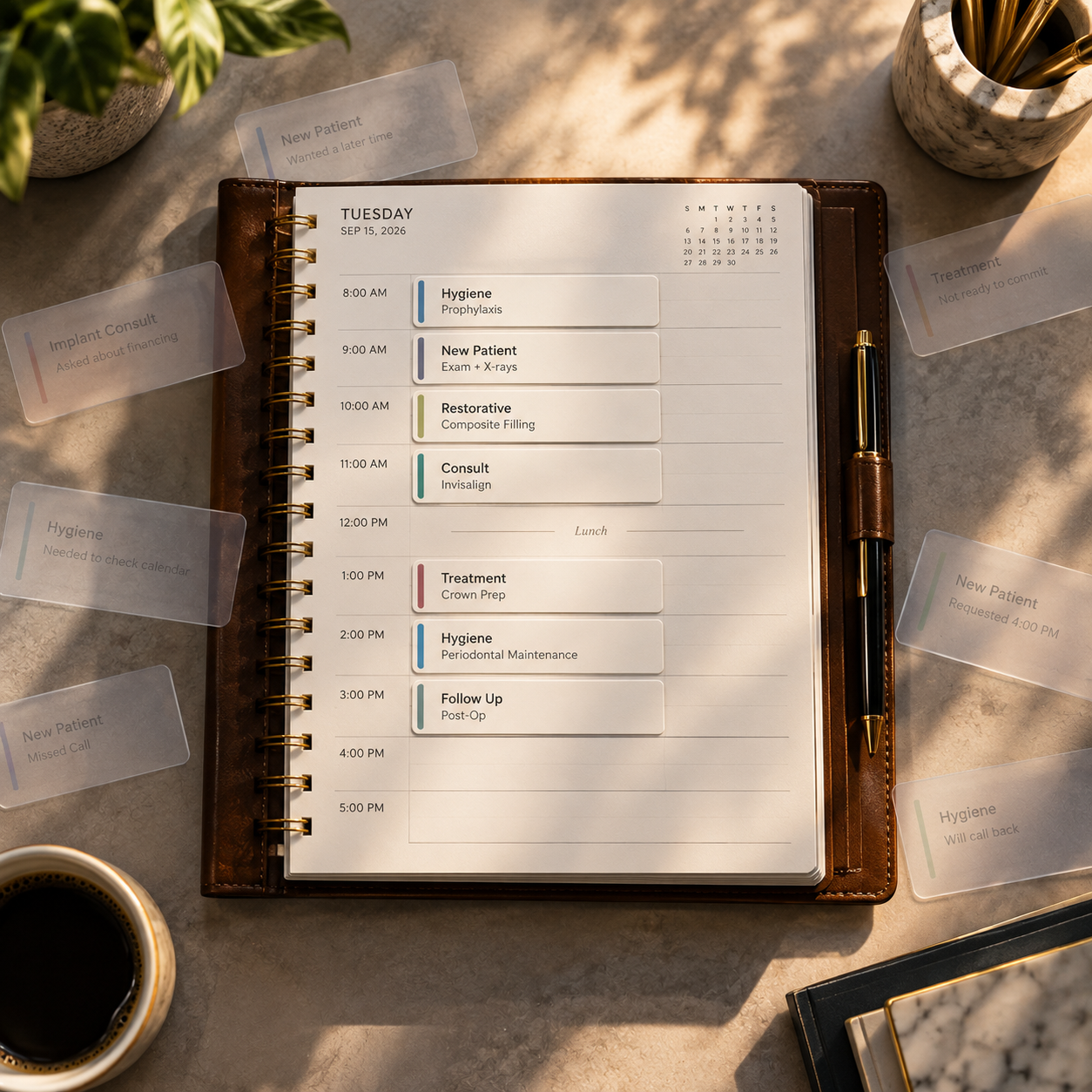
Your schedule can show what successfully became an appointment. It usually can't show the demand that came close, disappeared before booking, or never entered the system at all.

A patient can wait three days for an answer and still feel well cared for—or wait three hours and wonder whether anyone remembers them. The difference isn't always speed. Sometimes it's certainty.

A dental practice can generate more traffic, calls and inquiries without generating proportionally more patients. Sometimes the growth opportunity isn't creating more demand. It's losing less of the demand you've already earned.

A callback list shouldn't just tell a dental team who to call. It should preserve why the work exists, what outcome is still needed, and what has to happen before the patient's issue is actually resolved.

The goal of a good system isn't to make people interchangeable. It's to make expertise transferable—so the knowledge your best people have built can strengthen the team without becoming a burden they have to carry alone.

AI will automate more of the work inside dental practices. But the most sophisticated practices may use that efficiency not to eliminate human interaction, but to create more room for the moments where being human matters.

Clinical excellence remains the foundation of a dental practice. But as practices grow, an increasing share of their capacity depends on something patients rarely see: how reliably the organization operates around the dentistry.
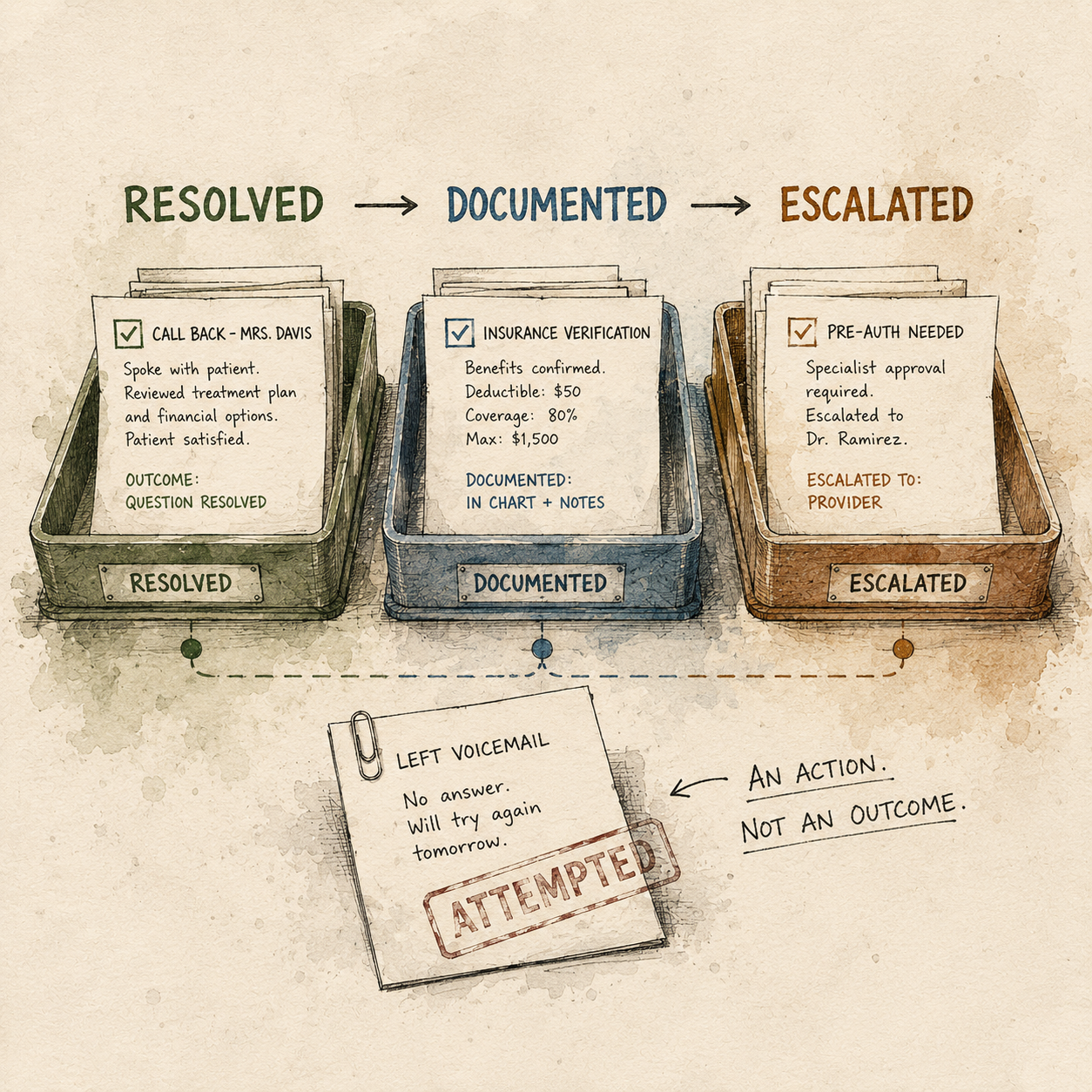
A completed action is not necessarily a completed outcome. When dental practices measure attempts, calls, and handoffs as finished work, unresolved tasks can disappear inside a task list that looks complete.
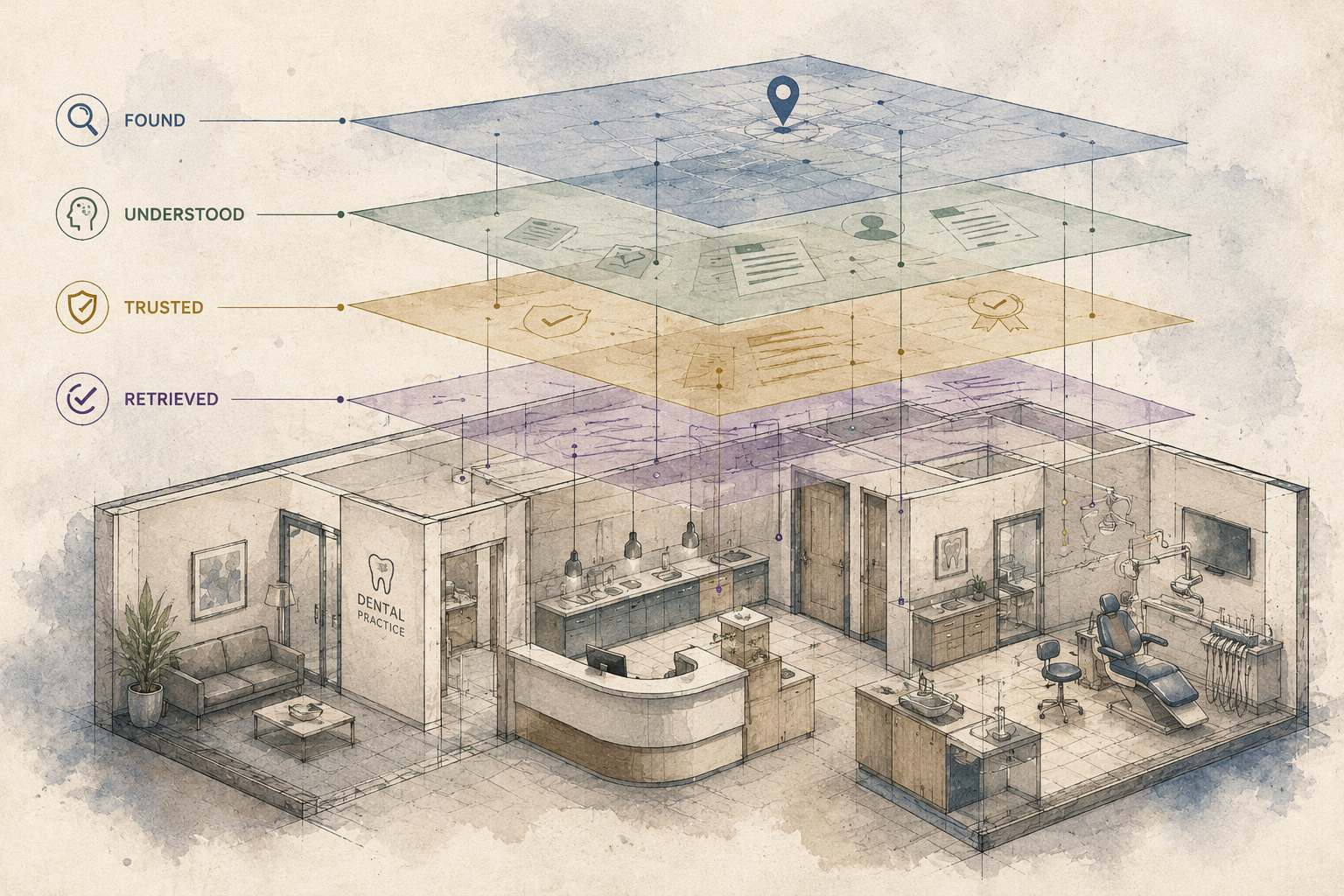
Dental websites were built to be found by search engines and understood by patients. AI discovery adds another requirement: your practice must be structured clearly enough for machines to understand, trust, and retrieve.

Great employees create enormous value. But when critical knowledge, exceptions, and recovery processes live primarily inside one person, competence can quietly mask operational fragility.

Patients don't experience scheduling, insurance, billing, and the front desk as separate functions. They experience one practice. When they have to carry context between those functions themselves, the seams begin to show.

Hourly rate is one of the easiest numbers to compare when evaluating support. It may also be one of the least useful. The real question is what remains unresolved after those hours have been worked.

Most practices evaluate outsourcing by comparing hourly rates and service features. The practices that make the best decisions ask something different first.

Most practices believe growth comes from adding capacity. The practices that scale sustainably usually build something else first: predictable operational continuity.
Most outsourcing companies ask you to compare hourly rates. That's the wrong comparison. The most expensive hour in your practice is the hour where work looked busy but nothing actually finished.

Most practices assume their follow-up system is working because no one is complaining about it. The pattern compounds in silence — and only shows up in the metrics that don't get tracked.
Most practice owners think premium is something you signal — through design, finishings, branding. Patients evaluate it differently. They're not looking at the chandelier.

Most communication training focuses on what the front desk says. Patients are evaluating something different — and they form most of their assessment in the first thirty seconds.
When operational drag starts showing up, most practice owners reach for the wrong solution. Not because the solution is wrong — but because the problem they're solving isn't the real one.

The gap between 'attempted' and 'confirmed' is where most dental practices lose continuity. How one small operational shift transforms insurance verification from a reactive bottleneck into a completed system.

Most dental support services sell hours. What they don't tell you is what happens between the touched tasks — and why the practice still walks into Monday morning feeling behind.

Most patient trust is shaped long before treatment begins. Not through dramatic moments — through whether the office feels coordinated, confident, and steady when the patient needs an answer.

Most dental offices don't lose hours to one big breakdown. They lose them thirty seconds at a time. What constant interruption actually costs a practice — and why most teams quietly adapt to it before they realize how much the day has changed.

Most smooth mornings are built through hundreds of small moments of preparation, coordination, and continuity happening underneath the surface.

Most operational stress gets filtered before it reaches patients. Learn how steadier systems reduce emotional turbulence and protect the patient experience.

Patients rarely understand the operational side of a dental office, but they naturally respond to environments that feel calm, coordinated, and emotionally steady.

Operational continuity is built through consistent systems, clear communication, and the ability to adapt without constantly rebuilding. Learn how to create that steadiness.

A lot of dental practices are not looking for perfection anymore. They are looking for smoother mornings, fewer interruptions, clearer communication, and operational breathing room.
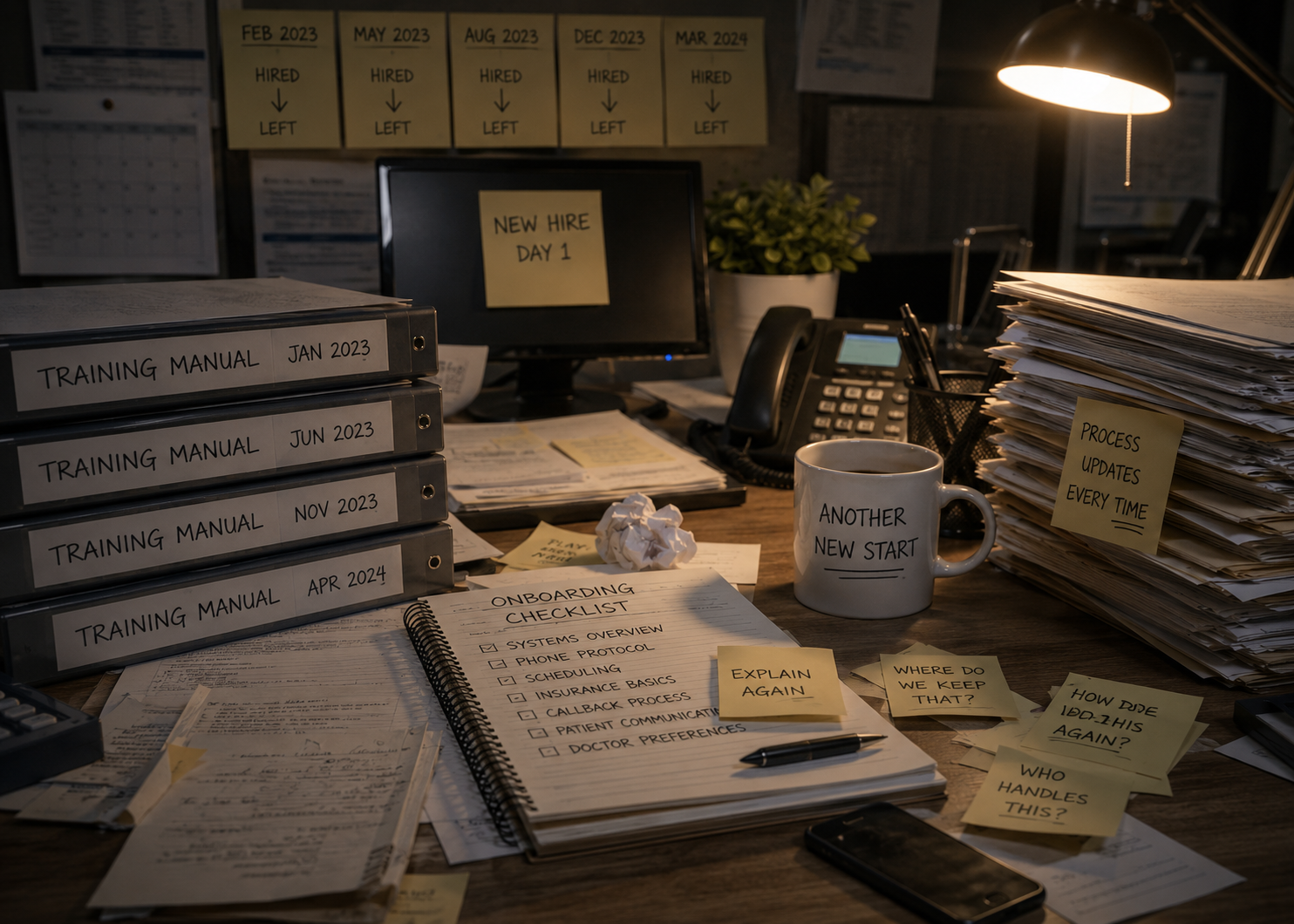
An observational essay on the emotional exhaustion of constantly rebuilding operational continuity — and why stability matters more than perfection for modern dental practices.
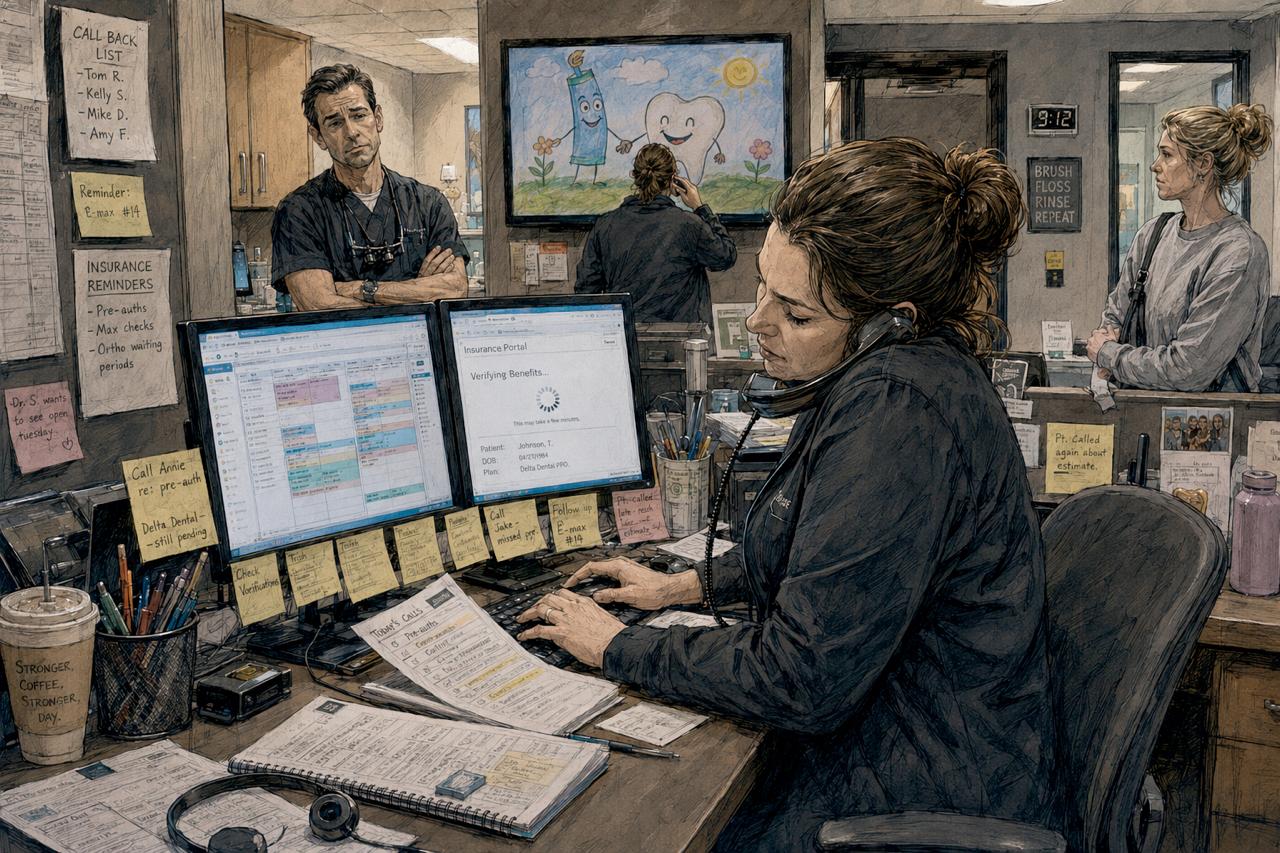
An observational look at the invisible operational strain in dental practices — the constant interruptions, mental switching, and pressure that accumulate quietly throughout the day.
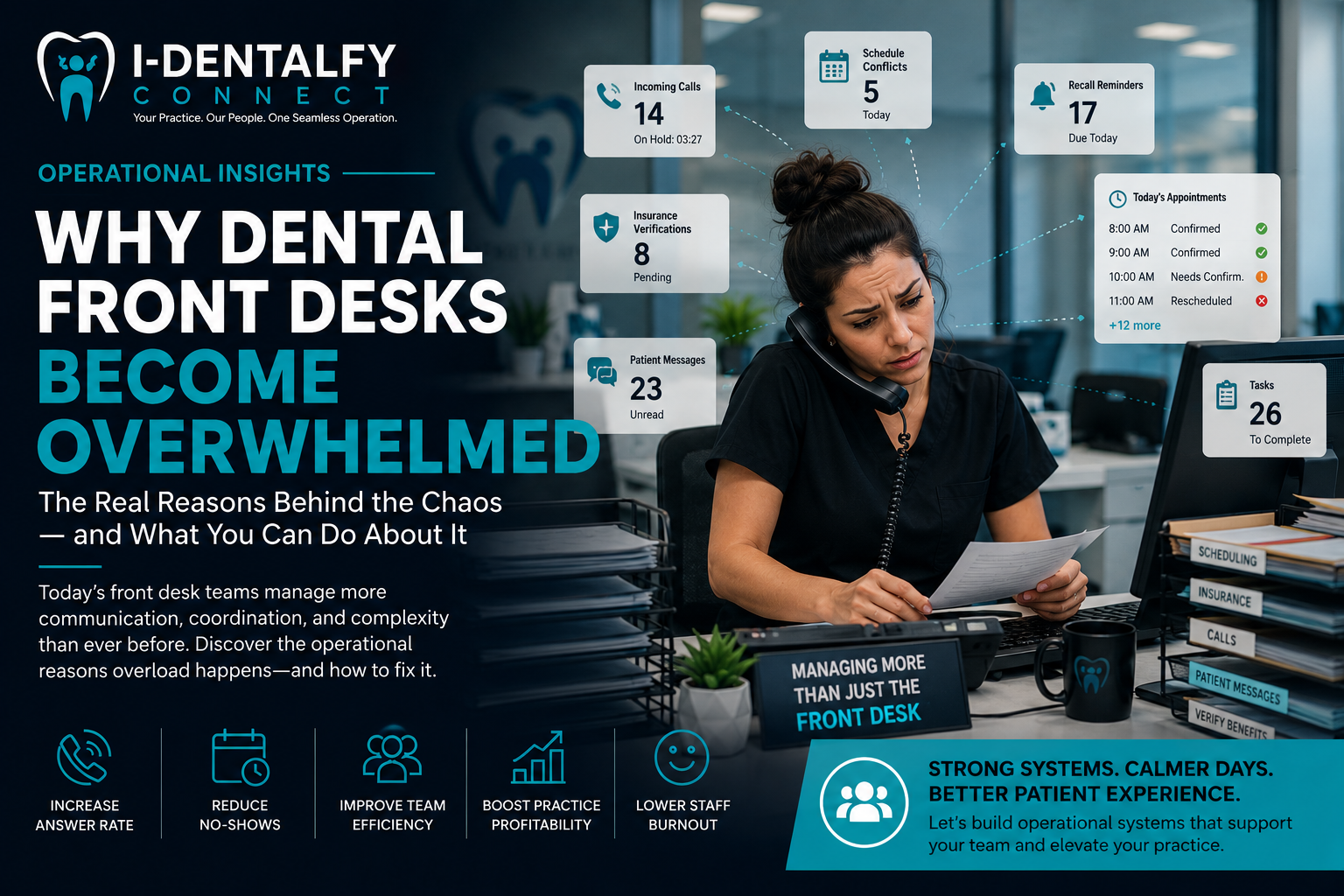
Discover the operational pressures, workflow bottlenecks, and communication breakdowns that overwhelm dental front desk teams — and what modern practices are doing to improve efficiency.
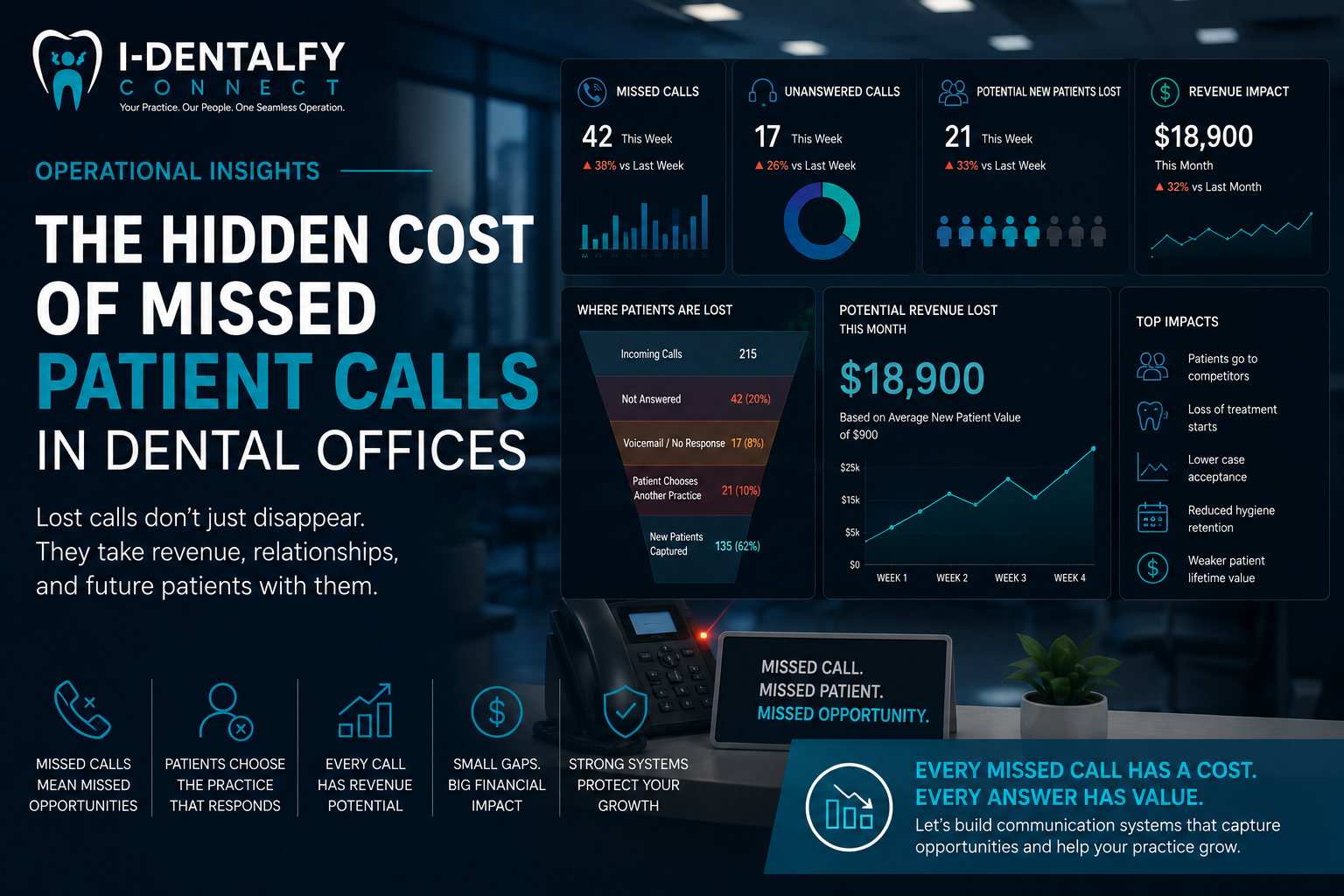
Missed patient calls can lead to lost revenue, reduced treatment starts, weaker patient retention, and operational inefficiency. Learn the hidden impact on dental practice growth.
Proven strategies to streamline workflows, strengthen patient communication, and create a front desk that can finally keep up with your growing practice.
Explore how dedicated operational support can reduce front desk strain, improve patient communication, and help your practice scale with confidence.
Schedule a Discovery Conversation