It's 1:51.
The appointment is at 2:00.
The patient is already there.
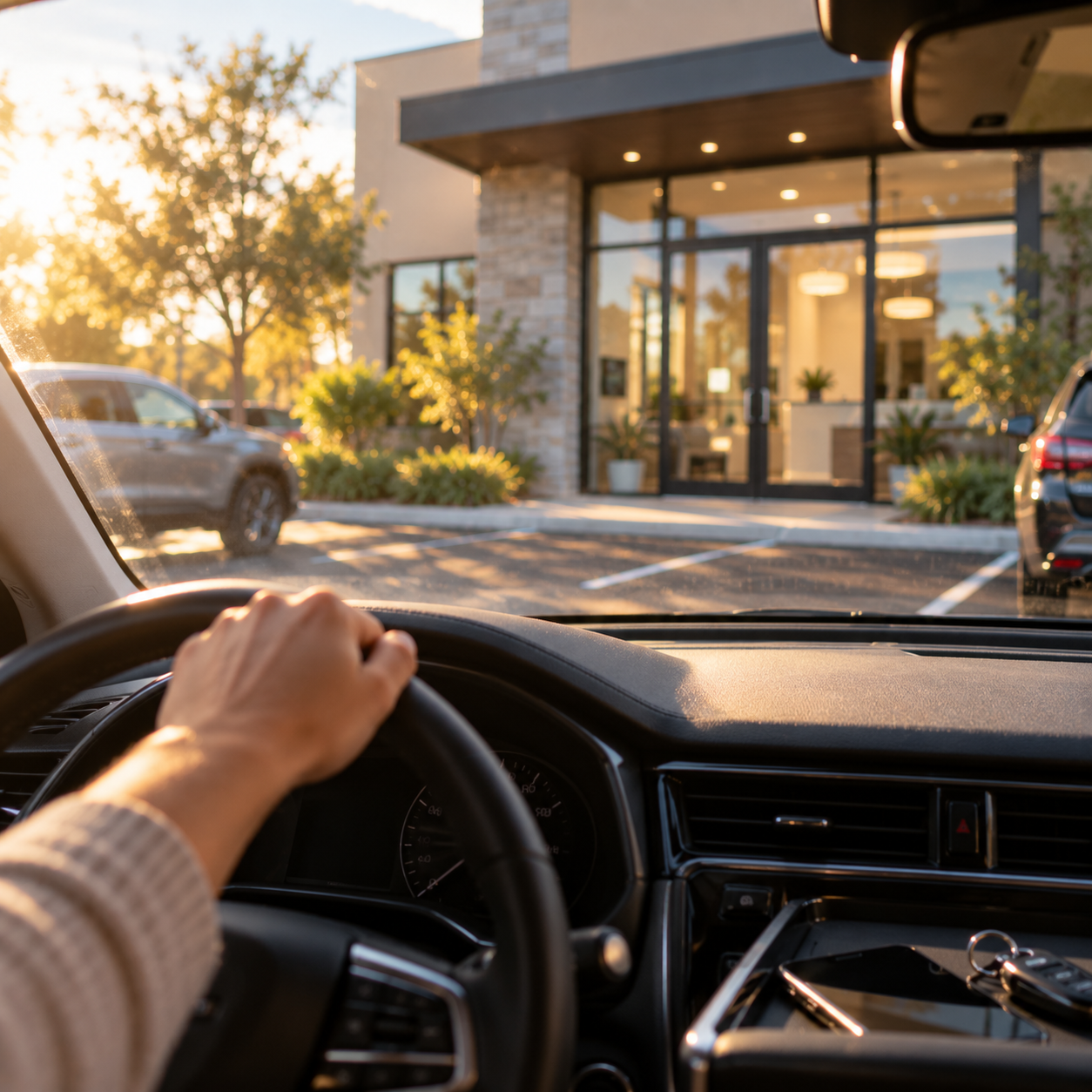
They pulled into the parking lot a few minutes ago, found a space, turned off the engine and looked toward the building.
Then they stayed in the car.
Maybe they check the time.
Maybe they look at the entrance again.
There are still nine minutes.
Inside the practice, nobody knows any of this is happening.
On the schedule, everything looks exactly as it should.
2:00 PM.
Patient name.
Procedure.
From an operational standpoint, the patient is early. From the patient's standpoint, the appointment may have started long before they arrived. Some people are nervous about going to the dentist.
That's hardly a surprising observation. But I think it's easy to forget how many different things can sit underneath that nervousness. Maybe it's been years since their last appointment.
Maybe they're embarrassed about the condition of their teeth. Maybe they're afraid someone is going to lecture them about how long they've waited. Maybe they had a painful experience somewhere else.
Maybe they already suspect they need significant treatment and they're worried about what they're going to hear. Maybe the thing they're most afraid of isn't treatment at all. It's the cost.
Or maybe there isn't a particular story behind it. They just don't like going to the dentist. Not every patient sitting in a parking lot is anxious, of course.
Plenty of people walk into a dental practice without thinking twice about it. But for the people who do feel nervous, there's something worth remembering: What's routine to the practice isn't necessarily routine to the patient.
The person answering the phone may have discussed the same procedure twenty times this week. The patient may have spent three nights thinking about it. The treatment coordinator may know there are several ways to approach the financial side of care.
The patient may have spent months wondering whether they can afford to fix their teeth at all. The clinical team knows what happens next. The patient may not.
That difference matters.
Because fear isn't always the only thing someone carries into an appointment.
Sometimes they carry uncertainty too.
Will they know why I'm here? Did they get the insurance information I sent? Am I actually scheduled for what we discussed?
Will I find out what this costs today? Am I going to have to explain everything again?
What's going to happen when I walk through the door?
Those may look like small questions from inside the practice. To someone already nervous, they can feel much larger. Uncertainty has a way of attaching itself to whatever we're already worried about.
And that's where operations become part of the patient experience in a way that isn't always obvious. A practice can't control everything a patient brings emotionally. It can't erase a bad experience from ten years ago.
It can't guarantee someone won't be nervous about treatment. It can't make a financial decision insignificant. It can't remove every fear.
But it can be careful about how much unnecessary uncertainty it adds. Did we communicate clearly? Did we do what we said we would do?
Does the next person know what the previous person discussed? Is the information the patient already provided actually available? Does someone own the unanswered question?
Does the patient know what happens next?
Those things sound operational.
To the patient, they don't feel operational.
They feel like: They know why I'm here. They remember what we talked about.
I don't have to explain everything again. Someone knows what happens next.
That feeling matters.
Especially for someone who almost didn't come.
We tend to think about patient experience beginning when a patient walks through the front door.
The greeting.
The waiting room.
How long they wait.
The interaction with the clinical team.
The conversation with the dentist.
All of those things matter.
But the experience began earlier than that.
It began when they searched for the practice. When they made the call. When someone answered.
When they asked the question they were nervous about asking. When the appointment was scheduled. When someone explained what they needed to bring.
When the practice followed up. By the time the patient reaches the parking lot, they've already had several experiences with the operation.
Those experiences either created more certainty or less of it.
That's why the schedule can only tell you part of the story.
The schedule knows the appointment.
The practice should know the story.
Not every personal detail.
Not information the practice doesn't need.
Not some artificial attempt to make every interaction feel personalized.
Just enough context that the patient doesn't repeatedly have to rebuild the experience from the beginning.
Why are they coming in? What has already been discussed? What are they waiting for?
What questions are still unresolved? What did we tell them would happen next?
When that context moves properly, something very simple happens.
The patient feels known.
Not intimately.
Not artificially.
Just enough to feel that the practice understands why they're there.
For someone sitting in a car trying to convince themselves to walk inside, that can matter more than we realize. Maybe they look at the clock again.
1:56.
Four minutes.
They pick up their phone, then put it back down.
Look toward the entrance.
There's nothing dramatic happening.
Cars are pulling in and out.
Someone walks across the parking lot.
It's an ordinary afternoon.
Inside, the team is working.
The previous patient may still be finishing.
Someone is answering the phone.
Someone else is preparing the room.
To everyone else, it's just another few minutes in the day.
For this patient, it might be the moment they decide not to drive away.
And that's why I think some of the most important parts of patient experience are difficult to see.
The practice never sees the appointment someone almost canceled. It doesn't see the conversation someone had with their spouse before finally making the call. It doesn't see someone searching treatment options late at night.
It doesn't see the patient sitting in the parking lot for five minutes before coming inside. It only sees them when they walk through the door.
By then, they've already done part of the work.
We can't remove everything a patient is afraid of.
But we don't have to add uncertainty to it.
Sometimes the first successful part of an appointment happens before anyone says hello.
The car door opens.